




Topics covered in an executive mentoring relationship
Executive mentoring can address diverse topics such as career satisfaction, professional development, work-life balance, role adaptation, and navigating corporate dynamics, with mentorship often lasting several months to years.
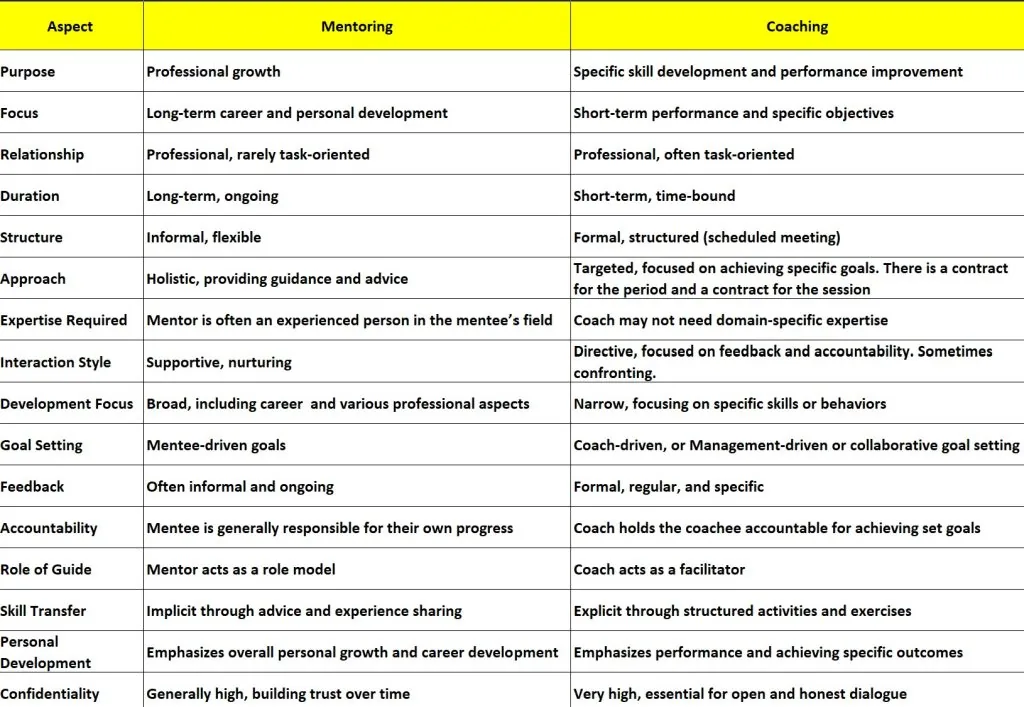
The distinction between executive coaching and mentoring
While executive coaching focuses on achieving specific outcomes within a set timeframe, mentoring offers a broader and longer-term perspective, concentrating on overall career development, personal growth, and life transitions.
How can an executive coach or mentor help you grow in a positive way?
An executive coach or mentor helps you grow by offering personalised guidance tailored to your goals and challenges. Through structured coaching sessions or mentoring conversations, they support your leadership development, enhance your communication skills, and strengthen your decision-making. In executive coaching we focus on specific, measurable objectives to improve performance and drive results within your organisation.
A mentor, on the other hand, shares valuable experience and insights, fostering long-term personal and professional growth.
Differences between Executive Coaching and Mentoring
Both roles encourage self-awareness, build confidence, and help you navigate complex situations with clarity. Whether you're a manager, leader, or executive, working with a coach or mentor equips you with the mindset, tools, and strategies needed to unlock your full potential and achieve lasting impact.
Crafting a Path to Leadership Excellence
Fostering a culture of leadership excellence takes more than aspiration; it takes deliberate, sustained investment. By leveraging executive coaching and mentoring together, organisations can nurture leaders who are both competent and inspirational.
Building Leadership Competence

The journey to becoming a remarkable leader demands a commitment to continuous learning and self-improvement. Executive coaching plays a crucial role in this transformative process:
- Skill Enhancement: Coaches work with you to develop pivotal leadership capabilities, catering to your unique strengths and challenges.
- Strategic Problem Solving: Through tailored coaching sessions, you learn to approach problems methodically, boosting your decision-making prowess.
- Accountability and Alignment: Regular interactions with your coach ensure you maintain focus on your goals, fostering a sense of accountability and alignment with organisational priorities.
Cultivating Inspirational Leadership
While competence is foundational, the ability to inspire and motivate others is what distinguishes extraordinary leaders. Executive mentoring offers invaluable insights into this art:
- Role Modelling: Mentors share experiences and lessons, providing you with a realistic portrayal of what it means to lead effectively.
- Emotional Intelligence: Mentoring emphasises the importance of empathy, self-awareness, and interpersonal skills, crucial components of inspirational leadership.
- Visionary Thinking: By engaging with mentors, you are encouraged to think beyond traditional boundaries and foster innovation within your teams.
By embracing both coaching and mentoring, organisations can craft a comprehensive approach to leadership development, ensuring that their leaders are not only skilled but also visionary and empathetic.
Fostering a Culture of Growth
The true power of coaching and mentoring lies in their ability to spark a culture of continuous growth within organisations. By leveraging these tools, companies can transform into thriving ecosystems that support development at every level.
Creating a Supportive Environment
For coaching and mentoring to be effective, it's essential to cultivate an environment where growth is not only encouraged but celebrated:
- Open Communication: Establish clear channels for feedback and dialogue, ensuring that employees feel valued and heard.
- Encouragement of Risk-Taking: Promote a culture where taking calculated risks is embraced, allowing individuals to learn from both successes and failures.
- Investment in Development: Provide resources and opportunities for staff to engage in coaching and mentoring, demonstrating a commitment to their growth.
Bridging the Gap Between Potential and Performance
By integrating coaching and mentoring, businesses can bridge the gap between individual potential and organisational performance:
- Personalised Growth Plans: Tailor development strategies to individual needs, fostering a sense of ownership and engagement.
- Collaborative Learning: Encourage cross-departmental mentorship, enabling diverse perspectives and the sharing of best practices.
- Performance Tracking: Implement robust mechanisms to monitor progress and adapt strategies, ensuring alignment with evolving business goals.

Ultimately, the fusion of coaching and mentoring within a supportive culture paves the way for a resilient organisation that embraces change and thrives in the face of challenges.
FAQ
How does executive mentoring differ from executive coaching?
Many leaders look for personalised guidance to sharpen their skills and grow more confidently into their roles. Executive coaching and mentoring offer tailored strategies to help them do that, each in a different way and at a different pace. By focusing on individual strengths and specific challenges, this approach provides a solid framework for sustainable growth and success across different organisational contexts.
What are the typical durations and frequencies of executive coaching sessions?
Executive coaching sessions generally last between 30 to 90 minutes and can be scheduled weekly or bi-weekly, depending on the individual's needs and goals.
Can one individual serve as both an executive coach and mentor?
Yes, the same individual can serve as both a coach and a mentor, providing a comprehensive approach to personal and professional growth by tailoring their interactions to meet the client's unique needs.
What are the measurable benefits of executive coaching for organisations?
Executive coaching doesn't just benefit individuals—it has a direct impact on organisational performance. By developing stronger leaders, companies often see improved team dynamics, increased employee engagement, and better decision-making. Coaching helps align leadership behaviours with company goals, driving innovation and accountability. Measurable outcomes include higher retention rates, faster conflict resolution, and enhanced strategic execution. Ultimately, investing in executive coaching leads to stronger organisational culture and long-term success.
How is confidentiality maintained in executive coaching sessions?
Confidentiality is a cornerstone of effective executive coaching. A safe, private space encourages honest reflection and open dialogue, allowing leaders to explore sensitive challenges without fear of judgment. Professional coaches adhere to ethical guidelines—such as those from the International Coaching Federation (ICF)—that strictly protect client information. Clear agreements are established upfront, detailing the scope of confidentiality, especially when coaching is sponsored by an organisation. This trust fosters deeper insights and accelerates personal and professional growth.
Other articles on Executive Coaching
- What is the cost of Executive Coaching?
- What do you do in executive coaching?
- What is Executive Coaching?
- What is the difference between executive and life coaching?
- What are the advantages of selecting an ICF Certified Coach?
- How can immersive coaching accelerate your career growth?
- Individual Coaching
This article was written by Marc Prager.