




Brief History of DISC Assessment
"Emotions of Normal People," a book written by psychologist William Moulton Marston, who held a Ph.D. from Harvard, was the first to describe how emotions shape our interactions. In any social setting, DISC history shows how everyday emotions give rise to behavioral differences.
What Are the Benefits of DISC?
Understanding DISC sharpens self-awareness and strengthens interpersonal relationships. By understanding their own personality type and recognizing others', people can adapt their communication style to foster better collaboration, reduce conflict, and improve teamwork.
Benefits of the DISC Assessment
More than 40 million people have used this assessment tool, also known as DISC personality types, to boost productivity and improve the quality of their team's work. This assessment offers several concrete benefits.
This behavioral assessment can be a powerful catalyst in executive coaching. By revealing a leader's natural tendencies in decision-making, communication, and stress response, it creates a concrete foundation for growth. Rather than relying on intuition or broad generalizations, coach and leader gain a shared language for exploring what truly drives performance.
Why Should I Take the Assessment?
In any group activity, teamwork and leadership are the two most essential traits. DISC training helps unlock your potential as a leader and equips you to build genuinely effective teams. It shows you the different proportions of traits that make up a candidate's personality — insight that directly supports workplace management.
We suggest you have a look at the various DISC online training courses. For better collaboration, smarter hiring, and well-matched management roles across your organization, understanding these results is essential.
What Are the 4 Personality Types?
The DISC personality test identifies four major behavioral styles, each describing a distinct personality tendency. Personality assessments like this help teams understand individual communication styles, strengths, and work preferences, fostering better collaboration, reducing conflicts, and improving overall team dynamics and productivity.
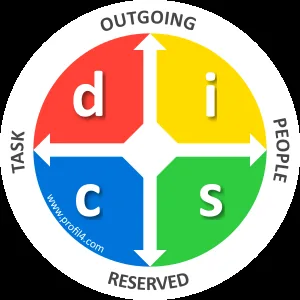
The DISC personality profile categorizes individuals into four main types based on behavior: Dominance (D), focused on results, confidence, and assertiveness; Influence (I), marked by social energy and enthusiasm; Steadiness (S), which favors patience, calm, and consistency; and Conscientiousness (C), which emphasizes accuracy, precision, and structure. Everyone shows a unique blend of these traits, offering insight into their motivations, strengths, and work preferences. The model is widely used in personal development, teamwork, and leadership training.
Why Do We Need a DISC Test?
The test is designed to understand a person's behavior in various situations, particularly in the workplace. The personality test helps improve self-awareness and fosters better teamwork by encouraging appreciation of different working styles.
Who Is Dr Marston?
Although Marston created the theoretical framework, he didn't develop the personality assessment itself. Later researchers and psychologists built on his work, formalizing it into the Marston DISC model into the widely-used personality profiling tool known today.
Why Engage a Leadership Style Consultant for Team Performance?
A consultant helps organizations strengthen collaboration and productivity by analyzing employees' behavioral styles using the model. DISC consultant services assess individual and team profiles, reveal how different personality types interact, and recommend strategies for improving workplace dynamics.
What Are the Benefits of This Personality Profile in Business?
The DISC Personality Profile benefits businesses by improving team collaboration. Understanding different personality types lets employees adapt their communication style, reducing misunderstandings and boosting productivity.
What Are the Benefits for Managers of the DISC Personality Tool?
By identifying dominant traits, managers can tailor their approach to motivate, delegate tasks, and give feedback more effectively. Additionally, DISC Personality tool sharpens emotional intelligence, helping managers adapt to diverse personalities and build stronger relationships — ultimately boosting productivity and overall team performance.

Effective Communication with DISC: communication is the key to success, whether individually or as a team. The words you choose can tilt the odds heavily in your favor.
What the DISC Colors Reveal About Your Personality
Understanding team dynamics starts with self-awareness. Discover the four core styles — Dominance, Influence, Steadiness, and Compliance — represented by the DISC colors: Red, Yellow, Green, and Blue. Learn how these powerful personality traits shape behavior and communication in your workplace.
This article was written by Marc Prager.