



How does equine coaching work?
It leverages the horse's natural sensitivity to human emotions and actions. Participants engage in non-riding activities, like guiding or observing horses, to uncover their communication styles and leadership abilities. The horse’s reactions serve as a mirror, helping individuals reflect on their behaviour, build self-awareness, and develop new skills in a supportive and engaging environment.
Who benefits from equine coaching?
It is beneficial for individuals, teams, and leaders seeking personal growth, improved communication, and better collaboration. It’s particularly effective for businesses aiming to strengthen team dynamics, leaders looking to improve relationships, or anyone interested in gaining emotional insight. The experience is inclusive and tailored to each participant's needs.
The benefits of equine-assisted coaching
Equine-assisted coaching can benefit you directly. Through interactions with horses, you'll gain valuable insights, develop practical skills, and see real change in how you lead.
We believe one of the key benefits is improved self-awareness. Working with a horse encourages us to be present and attentive. As we complete tasks together, participants become more aware of their emotions, body language, and intentions. Through our equine coaching sessions, you will notice an improvement in emotional intelligence.
Understanding the Benefits
Equine coaching is a process that involves working with horses as a means to facilitate personal and professional growth.
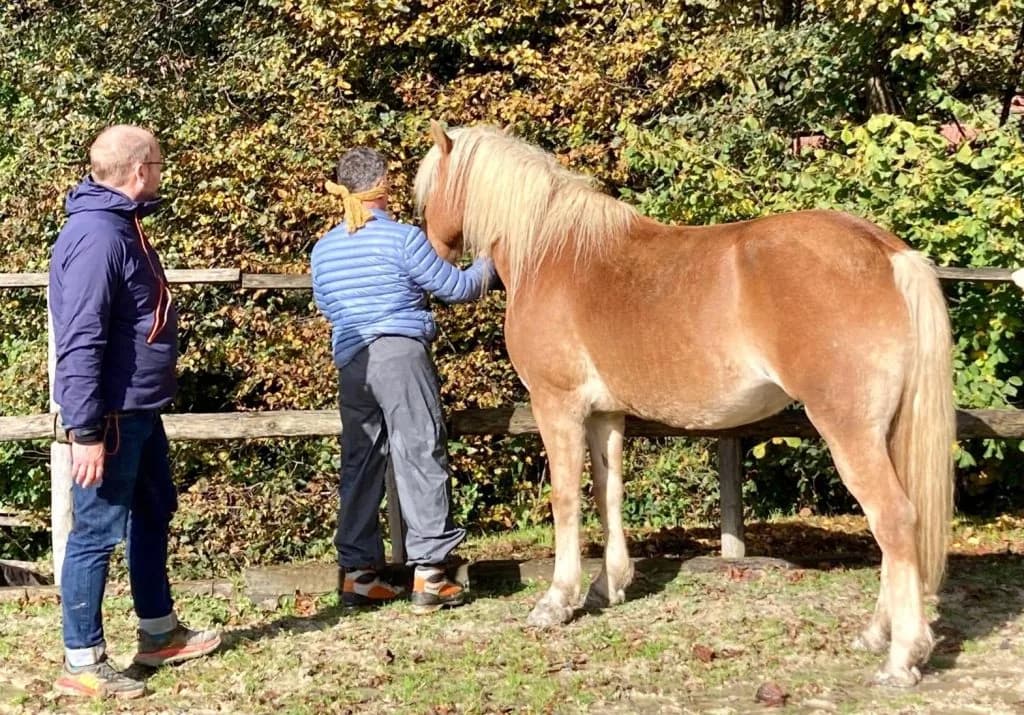
In a typical equine coaching session, people interact with horses under the guidance of trained coaches. Through these interactions, people learn to observe their own feelings, reactions, and thought patterns in real-time. Horses are incredibly sensitive to human emotions and can mirror the inner experiences of their handlers. This unique aspect allows participants to gain immediate feedback about their emotional states and interpersonal dynamics.
The process often begins with a simple task: leading a horse through a series of exercises. This may involve guiding the horse to walk in a specific direction, halt, or change speeds. The way people approach these tasks can reveal a lot about their leadership styles, confidence, and ability to communicate clearly. For example, if a client approaches the horse with anxiety, they might find that the horse resists moving forward. Alternatively, a calm and assertive approach may encourage the horse to respond more positively.
The coachees are encouraged to reflect on their interactions and consider how their behaviours impact not only their relationships with horses but also with people in their lives. This reflection fosters a deeper understanding of personal patterns and encourages the development of new skills that can be applied in various contexts.
How does it Facilitate Learning
Equine coaches guide and support clients throughout the learning process. Their expertise lies not only in working with horses but also in understanding the psychological and emotional aspects of the coaching journey. Here’s how they facilitate effective learning experiences:
First, equine coaches create a safe and supportive environment for clients. This safety is paramount, as it allows individuals to explore their emotions and behaviours without fear of judgment. Coaches carefully assess the dynamics between the horse and the client, ensuring that both parties feel comfortable and secure throughout the session.
Next, our coaches introduce various exercises tailored to each participant’s needs. These exercises are designed to challenge people while still being achievable. For example, a client may be asked to work on maintaining a specific posture while leading the horse. This not only encourages self-awareness but also fosters a sense of accountability and presence. Leaders and teams who ask what they need to change often find that horses help them see how they operate and relate to others — helping them grow and move forward with more purpose.
Equine coaches also provide ongoing feedback during sessions. They help clients interpret their interactions with horses, drawing parallels to real-life situations. For instance, if a client struggles to maintain the horse’s attention, the coach may guide them to reflect on how they engage with colleagues or peers. This reflection deepens the learning experience and promotes the application of new insights outside of the equine context.
Other articles on this subject
This article was written by Marc Prager.