




The Eisenhower matrix and planning
Working the Eisenhower Matrix into your schedule is easier than it sounds. Start by listing all your tasks, then sort each one by asking two questions: is this important for my long-term goals, and does it require immediate action? From there, place each task into one of the four quadrants.
It’s all about Honesty
It's tempting to label everything urgent or important, but overloading quadrant 1 is a fast route to stress and burnout. Plan your day around the quadrants instead: attend to quadrant 1 tasks immediately, schedule real time for quadrant 2, delegate quadrant 3 where you can, and actively try to eliminate quadrant 4.
The benefits of Eisenhower matrix in business
The Eisenhower Matrix, a time-management tool, excels in business by categorising tasks into urgent, important, both, or neither, enabling prioritisation and efficiency.
We use it a lot in our Time Management Training — it helps leaders focus on value-adding activities, delegate non-critical tasks, reduce procrastination, and sharpen decision-making, which together lead to better productivity, less stress, and smarter resource allocation for long-term objectives.
Unveiling the Eisenhower Matrix
The Eisenhower Matrix, often called the Urgent-Important Matrix, is a time-management tool that helps you prioritise tasks based on urgency and importance. It was popularised by Stephen Covey, building on a principle usually attributed to Dwight D. Eisenhower. It helps you focus on strategic priorities while minimising time spent on reactive or low-impact activities. The tool itself is a simple 2x2 grid of four quadrants, each corresponding to a different type of task — and understanding these quadrants is the first step toward better task management.
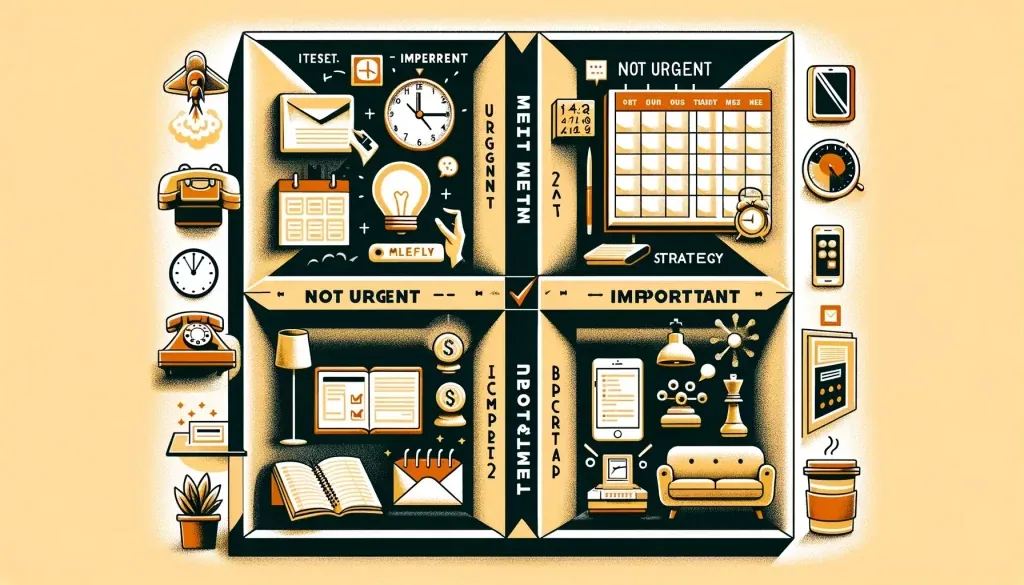
- Quadrant 1 – Urgent and Important tasks: These are the tasks that must be addressed immediately. They are both important for your targets and require your attention now.
- Quadrant 2 - Important but not urgent tasks: These tasks are important for long-term objectives but do not require immediate action.
- Quadrant 3 - Urgent but not Important tasks: These tasks demand your attention immediately but do not contribute significantly to your goals.
- Quadrant 4 - Neither Urgent nor Important tasks: These tasks don’t contribute to your plans and aren’t time-sensitive.
Increasing productivity with the Eisenhower Matrix
The real power of the Eisenhower Matrix lies in its ability to increase your productivity by helping you focus on tasks that contribute to your long-term objectives. By categorising tasks into different quadrants, you can easily see where you should spend your time and where you should not.

Tasks in quadrant 2 are particularly worth your attention. They might not seem urgent, but they are essential for your long-term plans and personal growth. By scheduling time to work on these tasks, you ensure that you are continually moving towards your targets.
Another key to increasing productivity with the Eisenhower Matrix is learning to delegate. Tasks in quadrant 3 might seem urgent, but they are not necessarily important for your goals. If possible, delegate these tasks and free up your time for more important work.
Transforming time management with the Eisenhower Matrix
The Eisenhower Matrix is not just a task management tool; it's a strategy for effective time management. By helping you prioritise your tasks, it ensures that you are spending your time wisely.
Remember that the purpose of the matrix is not to fill every quadrant with tasks but to help you focus on what's truly important. The ultimate aim is to spend more time on Quadrant 2 tasks that contribute to your long-term objectives and less time on Quadrants 3 and 4 tasks that don't help you achieve your targets.
Creating a Balanced Life with the Eisenhower Matrix
When applied correctly, the Eisenhower Matrix can genuinely create a more balanced, less stressful working life. It helps you manage urgent tasks, prioritise deliberately, and pace your work in a way that avoids burnout.
To truly create a balanced life, it's crucial to pay attention to how you're distributing your tasks amongst the quadrants. Varied allocation is key. Overloading Quadrant 1 with urgent and important tasks may cause unnecessary stress and anxiety. On the other hand, having too many tasks in Quadrant 4 would mean you're spending too much time on unproductive activities.
Remember that Quadrant 2 is your long-term investment quadrant. The tasks here aren't immediately urgent, but they are essential for your long-term goals and personal growth. Spend quality time here working on skill-building, strategizing, and planning.
Quadrant 3 is your delegation quadrant. While these tasks are urgent, they are not necessarily crucial to your goals. If you can, delegate these tasks to free up your time for Quadrants 1 and 2.
Quadrant 4 is your elimination quadrant. These tasks are neither urgent nor important and are essentially distractions. Try to reduce or eliminate these tasks to increase productivity.

Also, remember that it's okay for your matrix to look different from someone else's. Everyone has different priorities, tasks, and goals. The purpose of the Eisenhower Matrix is to help you structure your time in a way that best suits your needs.
FAQ
What is the Eisenhower Matrix and how does it work?
The Eisenhower Matrix is a time management tool that helps you prioritise tasks by urgency and importance. It's a four-quadrant grid: urgent and important (do first), important but not urgent (schedule), urgent but not important (delegate), and neither urgent nor important (eliminate). Sorting tasks this way makes it far easier to see what needs your attention right now, and what can wait or be handed to someone else.
How does the Eisenhower Matrix help in prioritising tasks?
The Matrix aids in prioritisation by dividing tasks into two key dimensions: urgency and importance. Urgent tasks are those that require immediate attention, while important tasks contribute to long-term goals and values. By using the Matrix, you can visualize which tasks demand immediate action and which ones are crucial for your long-term success, allowing you to prioritise effectively and avoid spending time on less significant activities.
Can the Eisenhower Matrix be used for both personal and professional life?
Yes, the Eisenhower Matrix is a versatile tool that can be applied to both personal and professional settings. Whether you're managing work projects, household chores, or personal goals, the Matrix can help you sort and prioritise your tasks effectively, ensuring that you allocate your time and resources to the most critical activities in any aspect of your life.
Other publications on the same subject
- Time Management: what is the best Definition?
- What are the 5 best Time Management Tools?
- How to improve time management skills
- 7 fundamental laws of time management
- How do you say no and prioritise?
- What are the 7 best time management tips?
- What are the five thieves that steal your time?
- Is multitasking an illusion?
- Managing Work-Life Balance: a few Evidence-Based Strategies
- Procrastination: how do you overcome it?
This article was written by Marc Prager.