




How Can a Quiz Enhance Understanding of Different Cultures in a Training?
A quiz promotes active recall of cultural facts, customs, and communication styles, and challenges stereotypes by pushing for nuanced knowledge of global norms and histories. Immediate feedback highlights knowledge gaps, prompting participants to better internalize the practical application of intercultural theory.
Building Intercultural Awareness Through Training
Effective activities include simulations and role-play to practice behaviour in cross-cultural scenarios, and case studies of real-life misunderstandings that build analytical problem-solving. Guest speakers or "cultural sharing" sessions add authentic, firsthand insight, building empathy and reinforcing what's been learned.
What Are the Benefits of an Intercultural Management Quiz?
Our intercultural management quiz equips leaders with crucial insight into diverse norms and business practices, sharpening their ability to navigate international environments effectively.
This tool raises awareness, deepens understanding, and helps spot potential conflicts early — enabling more thoughtful decisions and more effective communication. By encouraging leaders to reflect on their own assumptions as well as others', it strengthens their ability to navigate diverse perspectives with confidence and adaptability. Boost your global impact: join our intercultural management training and elevate the way you lead across cultures.
Power Distance Index From Hofstede
It represents the degree to which the less powerful members of a society accept and expect power to be distributed unequally. In essence, it's about how a society handles inequality among its members.
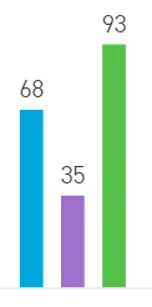
1. A higher power distance index (PDI) in Russia (93) than in France (68) means that:
- A. In Russia, men have more power
- B. In France, men keep more distance from women
- C. French managers would tend to have higher expectations regarding feedback from subordinates
- D. In Russian society generally, the boss is the boss, and his decisions should not be challenged.
The idea is simply to test your skills and get you thinking. You'll find the results at the bottom of the page — good luck!
2. A higher PDI in Russia (93) than in France (68) and Germany (35) means that:
- A. France, Germany, and Russia are completely different, and it isn't possible for Russians to adapt to Germans or French people.
- B. In Germany, men keep more distance from women than in France.
- C. German managers would tend to be more open to suggestions from subordinates and to a "bottom-up" management style.
- D. In Russian society generally, the boss is the boss, and his decisions should not be challenged — doing so would not be well received in public.
3. The lowest index (PDI) concerns Russia.
- A. True
- B. False
4. What does PDI stand for: Power Distance Increase?
- A. True
- B. False
5. Definition of Power Distance Index
The huge gap between the less and the more powerful leads to a strong emphasis on status symbols. In countries with high PDI scores, the ideal managerial approach is top-down, providing clear direction for every task.
- A. True
- B. False
We offer intercultural management seminars to develop your team's skills and become more effective with your employees, customers, and suppliers.
6. Risk and Management:
What are the risks for Masha Nikolaeva (from Moscow) who recently became European finance manager in London for an international company?
- A. She could come across as too nice to her colleagues, since Russians are generally very friendly
- B. She could find London very expensive
- C. She could have trouble finding the right stop, since Google Maps doesn't work in the Metro
- D. She could be seen as authoritarian by her other European colleagues, even the South American ones
- E. She should keep in mind that Russia, among the largest economies, is one of the few countries where managers may implement decisions without prior agreement from the group or their subordinates.
- F. She could say that her son Ivan's primary school teacher has no authority over the class — what a mess, everyone talking over each other!
- G. She should be careful not to distract English colleagues at work because of her looks
Collectivism and Individualism
Collectivism reflects a preference for a tightly knit social framework, where individuals can expect colleagues or friends within a group to look after them in exchange for loyalty. Individualism, by contrast, is a preference for a more loosely knit social environment.
6. The Parable of the Two Sons
There was a man who had two sons. He went to the first and said, "Son, go and work today in the vineyard." "I will not," the son answered — but later he changed his mind and went.
The father then went to the other son and said the same thing. He answered, "I will, sir," but he never went.
Which of the following statements is correct?
- A. The first son shows the highest IDV score, since he clearly voices his disagreement with his father's request
- B. In China, the second son's behaviour is the more likely of the two
- C. In the United Kingdom, the second son's behaviour is the more likely of the two
- D. In Russia, the second son's behaviour is less likely than in China
- E. In France and Sweden, all children are equal and have the same rights
7. Trust in Business and Relationships
"Я его знаю, это мой старый друг" — translated from Russian, "I know him, this is my old friend" — let's trust him and extend a credit line.
These words, from Russian employees to an expat boss, are likely to create the following. Please pick three choices…
- A. English-speaking expatriates tend to agree that, after working in Moscow for a long time, the relationship comes first and contractual terms come second.
- B. People have more friends in Russia than in the US.
- C. English-speaking expatriates tend to agree that no matter how good the relationship is, you still need a contract.
- D. It's forbidden to do business with your friends in the United States, as mentioned in the constitution.
- E. In the US, managers show a stronger IDV score than in continental European countries, leading them to give less weight to personal aspects and relationships when doing business.
8. Geert Hofstede in Different Cultures:
The impact of Individualism vs Collectivism
A US lawyer comes to Moscow to sign a contract. The overall budget is over $20 million. What is likely to surprise his Russian counterpart?
- A. The US lawyer will spend a lot of time getting to know his Russian counterpart before signing anything.
- B. For US citizens generally, it's usual to spend time socializing with counterparts before doing any kind of business.
- C. With an IDV score of 91, the US has the highest index for individualism. A lawyer is likely to voice disagreement openly, even at the expense of his local colleagues' comfort.
- D. For $20 million or less, it's not necessary to sign a contract in the US.
- E. The draft contract might be significantly longer than the Russian side expects. In societies with high collectivism, contracts tend to be shorter and focused only on key issues.
Results of Our Quiz:
Q1 — C & D: the higher the power-distance index, the greater the acceptance of inequality. Employees look to their manager for guidance.
Q2 — C & D: German culture is known to be more egalitarian.
Q3 — False: Russia has one of the highest scores in the world. The higher the power-distance index, the more visibly leaders tend to exercise power.
Q4 — False: PDI stands for Power Distance Index.
Q5 — True: employees with a high power-distance index expect clear direction and a top-down approach.
Q6 — D, E & F: she might come across as too authoritarian to her English colleagues. The gap in power-distance index between Russia and England is significant, which can create friction between a person's home culture and their new colleagues.
Q7 — A, C & E
Q8 — C & E
Get in touch with us for more information — contact us by email.
Conclusion of the Course:
If you got more than 8 correct answers, congratulations — you're among the top respondents. If you scored between 4 and 7, you already have some solid insight, and we'd be glad to offer you training to deepen it further. Just fill in the form with your first name and email address.
Other Articles on the Same Subject
- Trompenaars: what are the 7 Cultural Dimensions?
- Erin Meyer Culture Map
- Intercultural Conflict Management
- How to avoid the pitfalls of multicultural communication
- What Is Intercultural Management?
- Intercultural Communication in Organization: How to Improve It?
- Intercultural Management Consulting
- Intercultural Communication Training: Learn how to Communicate
This article was written by Marc Prager.