




What Does ESFP Stand For?
ESFPs are commonly known as ‘The Entertainer’ — an acronym for Extraverted, Sensing, Feeling, and Perceiving. Drawing energy from the world outside, they appreciate the little things around them and thrive on the company of others, bringing a fun-loving spirit wherever they go. Rather than worry about the future, they make the most of the present moment, always looking to keep that spark of life alive.
What MBTI Is Compatible With ESFP?
ESFP types love being the centre of attention at any social gathering. Talkative and quick to make friends, these social beings are usually the icebreaker in any group or team. Despite their extroverted nature, they're most compatible with INTJ, INFJ, ISTJ, and ISFJ types — opposite natures that attract and balance good introverted extraverted relationship together with ESFPs.
Is ESFP a Rare Personality?
ESFP personalities are typically known as performers, thanks to the traits that draw people's attention. Optimistic by nature, they look on the bright side and love exploring new ideas, living every moment to the fullest and pulling everyone else along. The energetic ESFP type makes up around 9% of the world's population, with a slightly higher share among women than men — roughly 10% versus 7%. Curious about the jobs that fits ESFP best? Read our article.
The MBTI (Myers-Briggs Type Indicator) is more than a personality test — it's a powerful tool for personal and professional transformation. Weaving MBTI into your coaching journey gives you deep insight into your psychological preferences and communication patterns.
Key Traits of ESFP Personality
An ESFP's presence can lift the mood of everyone around them and leave people feeling refreshed. They make decisions based on their feelings and stay highly flexible in how they work, and people tend to find them warm, welcoming, and energetic. Here are the key traits that define ESFP personalities best:
- Optimist
- Observant
- Practical
- Understanding
- Fun-loving
Strengths of ESFP Personalities
ESFPs bring remarkable strengths to the table. Practical in their approach, they know how to stay flexible and experiment with new opportunities at work, and their warmth and energy engage everyone around them. Effective communication, strong relationships, and an optimistic mindset are what make this personality such an essential part of any team.
Weaknesses of ESFP Personalities
Making spontaneous decisions and trying new approaches from time to time can lead ESFPs to overlook the consequences down the line. It's easy to recognize that ESFPs don't plan much and prefer to live in the present. They also crave some thrill and excitement to keep them going, which means schedules and routines can wear thin fast — they want concrete facts and figures, not abstract ideas.
ESFP Cognitive Functions
Because the ESFP personality results from four distinct functions, its driving forces differ from those of other MBTI types. The four cognitive functions in ESFPs are as follows:
Extraverted Sensing: ESFPs aren't fans of planned, structured working environments, and they keep new ideas flowing right up to the last moment. Rather than reasoning from abstract ideas, they base decisions on facts, prioritising their sensing and trusting their own abilities to find solutions.
Introverted Feeling: the auxiliary function supporting the dominant trait. ESFPs are strongly moved by their feelings and considerate of how their decisions affect others' emotions — in short, they listen to their inner voice when deciding something.
Extraverted Thinking: this function lets ESFPs keep their thoughts to themselves. They're not always comfortable sharing their opinions with others, though at work they do weigh logical, rational points of view.
Introverted Intuition: the weakest function in ESFPs, which means they can sometimes struggle to make connections or spot patterns in information. Even so, their internal instincts guide them through the decision-making process.
The energetic, warm, fun-loving ESFP is a genuinely sought-after personality on any team. These social beings crave options and variety at every step of life, and they thrive working alongside people — though they have little patience for doing things the traditional way.
Careers for ESFP
The thrill and fun-seeking side of the ESFP personality means repetitive tasks bore them fast. They want to explore new horizons and work across a variety of situations, and any career path that lets them experiment with different options suits them well — acting, art, music, design, or coaching are natural fits.
Why Are ESFPs So Popular?
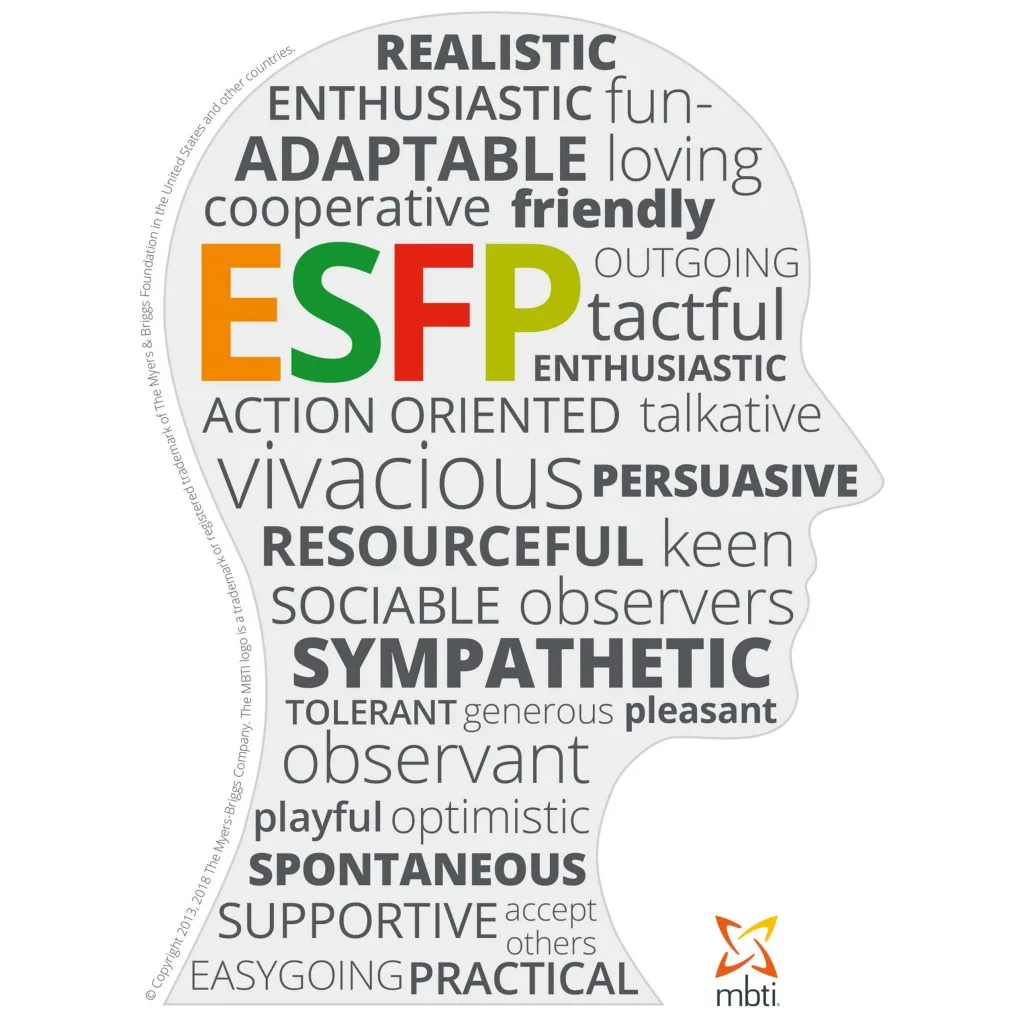
ESFP energy is contagious. Not only do they love being surrounded by people, they also pick up on the feelings of those around them. Quick to make spontaneous decisions, they can sometimes overlook the long-term consequences, but they genuinely enjoy hearing what's going on in other people's lives. Believers in strong relationships, they prefer to grow as part of a team and stay optimistic about their career and personal life alike. Their practical approach values facts and figures over abstract ideas, and in the end, ESFPs always chase a bit of fun — at work or anywhere else — and relish a challenge that gets them excited.
- ENFJ | Presentation of the Protagonist | MBTI Profile
- ENTJ | presentation of the Commander | MBTI profile
- ENTP | presentation of the Debater | MBTI profile
- ESFJ | presentation of the Consul | MBTI profile
- ESTJ | presentation of the Executive | MBTI profile
- ESTP | Presentation of the Entrepreneur | MBTI profile
- INFJ | Presentation of the advocate | MBTI profile
- INFP | presentation of the Mediator | MBTI profile
- INTJ | presentation of the Architect | MBTI profile
- INTP | presentation of the Logician | MBTI profile
- ISFJ | presentation of the Defender | MBTI profile
- ISFP | presentation of the Adventurer | MBTI profile
- ISTP | presentation of the Virtuoso | MBTI profile
- ISTJ | Presentation of the Logistician | MBTI profile
- ENFP | presentation of the Campaigner | MBTI profile
This article was written by Marc Prager.