




What does INTP Stand For?
INTP stands for Introverted, Intuition, Thinking, and Perceiving. People with this type are often reserved, quiet, and thoughtful introverts without a large social circle, preferring their own world and internal thoughts. They can become so absorbed in thinking that they detach from the outer world, favouring logical analysis over subjective feeling. This personality type is often called 'The Logicians'.
Which MBTI is Compatible with INTP?
INTPs, being introverted, tend to match best with dominant extraverted types such as ENTJ or ESTJ, their most compatible partners. This pairing works both ways — each side enjoys their shared similarities while learning from their differences. INTPs rarely connect easily with everyone at social gatherings, preferring people who share their values and way of thinking.
Is INTP the Rarest Personality Type?
INTP is the most philosophical personality among all the MBTI types. Men outnumber women here too — about 5.8% of men against roughly 4% of women — with INTPs making up around 4.8% of the world's population overall. Understanding these personalities helps people make better choices in life and explore new horizons.
Gaining insight into this way of thinking can shift how you make decisions, communicate with others, or choose the environments where you can truly thrive. Want to explore what your personality reveals about your strengths, and how the MBTI can help you grow? Let's connect.
Why are INTPs So Popular?
INTPs tend to be intellectual, valuing intellect over emotion. They can visualise the bigger picture and set ambitious targets, weighing logical, objective information before reaching any conclusion. Their creative, innovative approach to thinking makes their work stand out. Easy-going and adaptable, they resist rigid structure and prefer to keep ideas open until the last moment. They're also affectionate toward others and can sense their problems — this empathy and kindness help them build lifelong relationships.
Key Traits of INTP Personality
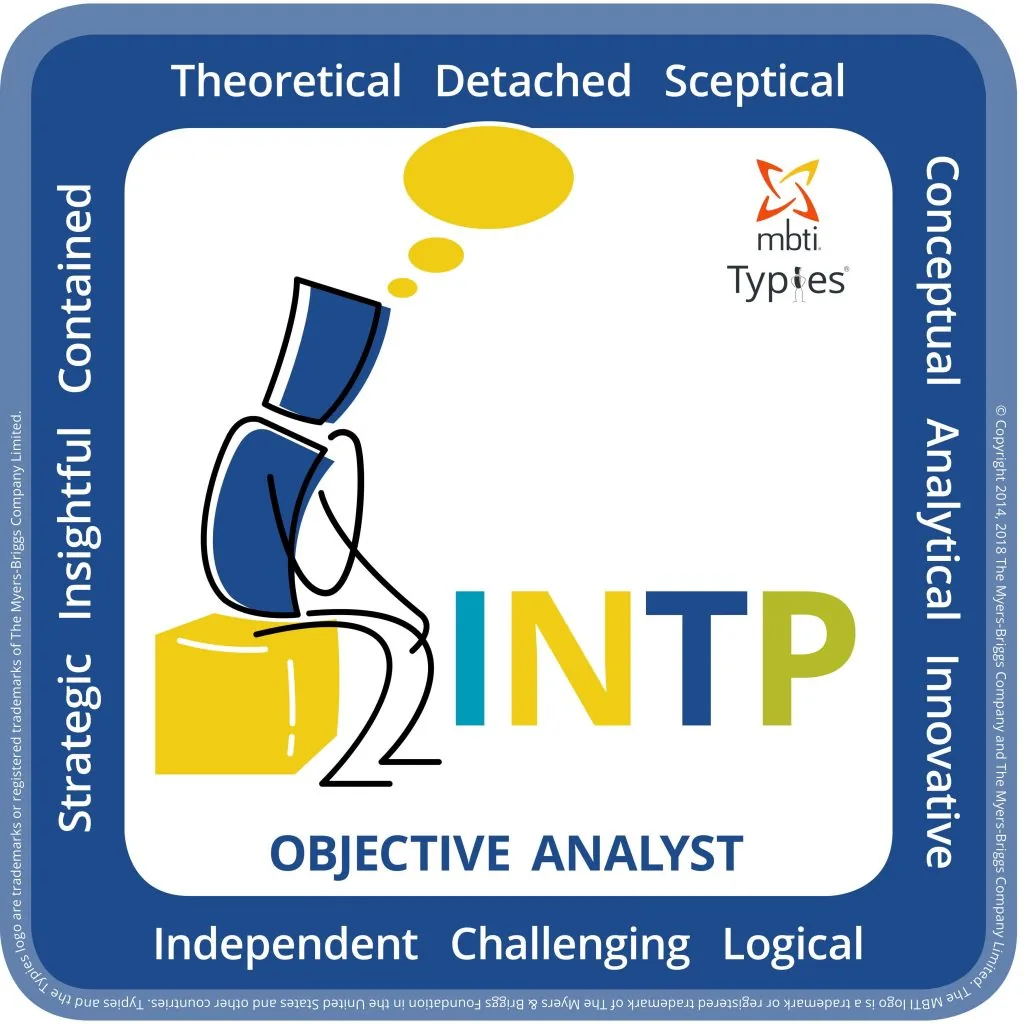
INTPs have a deep sense of imagination and spend much of their time lost in thought, working through logical theories and concepts. Reserved by nature, they tend to hold firmly to their own values and principles. The key traits of INTPs are as follows:
- Independent
- Objective
- Imaginative
- Analytical
Strengths of INTP Personalities
An individual's strengths, once understood, can be put to work for maximum benefit in personal and professional life. Organisations value how concisely INTPs analyse their surroundings and their knack for finding new ideas to tackle the task at hand. Straightforward and honest, they expect the same from others. INTPs enjoy working with people who are creative, hard-working, focused, and objective. Though they resist interference and prefer working independently, they do welcome ideas that are backed by logic.
Weaknesses of INTP Personalities
No personality type is without room to grow, and INTPs have their own areas to work on. They tend to stay in their shell and keep emotions to themselves, which can make it hard for others to read their feelings. Convinced their own ideas are sound and prizing independence at work, they can end up overlooking others' feelings and becoming less understanding of them. They flourish in flexible environments and typically struggle under strict time limits or pre-planned schedules.
Careers for INTP
INTPs bring a strong reasoning and analytical approach, favouring concrete facts over subjective theory and enjoying the chance to experiment with new approaches and ideas. A regular schedule or rigid structure tends to limit how well they perform at work. Careers that let them stay independent and flexible usually suit INTPs best — mathematician, forensic scientist, physicist, engineer, and app developer are a few options worth considering.
INTP Cognitive Functions
Each personality type is shaped by four cognitive functions. The dominant function reflects most strongly in an individual, supported by the auxiliary function, while the remaining two show up less often and only occasionally. INTP blends the following cognitive functions:
Introverted Thinking: The dominant cognitive function of INTPs gives them a logical, analytical way of perceiving the world, helping them understand how things work. They favour the energy of their inner world over the outer one and tend to avoid jumping to conclusions before weighing every angle of a situation.
Extraverted Intuition: The auxiliary function pushes INTPs to think between the lines, processing information and looking for connections. Following these threads and exploring the data helps them spot future possibilities.
Introverted Sensing: INTPs examine information closely, trying to grasp every fact they encounter. Comparing recent findings against what they already know helps them sense how things are likely to unfold in the near future.
Extraverted Feeling: INTPs suppress their feelings as much as possible and steer clear of emotional conversation. Introverted by nature, they still get along well with people close to them, preferring to keep feelings aside when making decisions in life.
Other MBTI types
- ENFJ | Presentation of the Protagonist | MBTI Profile
- ENTJ | presentation of the Commander | MBTI profile
- ENTP | presentation of the Debater | MBTI profile
- ESFJ | presentation of the Consul | MBTI profile
- ESFP | Presentation of the Entertainer | MBTI profile
- ESTJ | presentation of the Executive | MBTI profile
- ESTP | Presentation of the Entrepreneur | MBTI profile
- INFJ | Presentation of the advocate | MBTI profile
- INFP | presentation of the Mediator | MBTI profile
- INTJ | presentation of the Architect | MBTI profile
- ISFJ | presentation of the Defender | MBTI profile
- ISFP | presentation of the Adventurer | MBTI profile
- ISTP | presentation of the Virtuoso | MBTI profile
- ISTJ | Presentation of the Logistician | MBTI profile
- ENFP | presentation of the Campaigner | MBTI profile
This article was written by Marc Prager.