




What does ISTP Stand For?
ISTP stands for Introverted, Sensing, Thinking, and Perceiving. Energised by their inner world, ISTPs enjoy time alone and favour concrete facts and figures over abstract ideas. Naturally observant, they focus closely on details and rely heavily on logic and reasoning when making decisions. Free-willed and open-minded, they prefer to act spontaneously rather than follow rigid plans — earning them the nickname "The Virtuosos".
Which Personalities are Compatible with ISTP?
ISTPs are usually reserved and maintain a good temperament even in difficult circumstances. Empathetic by nature, they understand how others feel, though they value their own time and can find it hard to open up to others. They're most compatible with types like ESFJ, ENTJ, or ESTJ — extroverted personalities that balance out ISTP's introversion, forming lasting relationships.
Is ISTP the Rarest Personality Type?
ISTPs are practical and analytical, valued by any group or organisation for their tolerant nature. They make up about 9.8% of the world's population — 13.3% of men against just 6.8% of women.
We provide MBTI-based executive coaching to corporate clients across Europe and the Middle East.
Why are ISTPs So Popular?
Stress management is the ISTP's strongest quality, whether in life or at work — they know how to tackle a problem calmly and stay composed. Curious about everything, they can work independently just as well as they help others, staying practical and using facts and figures to reach any conclusion. Virtuosos prefer to look on the brighter side of a situation and enjoy the moment.
Key Traits of ISTP Personality
ISTPs are action-oriented, always coming up with innovative solutions to immediate problems. They enjoy exploring new opportunities and making the most of the present moment. Key characteristics of the ISTP personality type include:
- Logical
- Reserved
- Kind
- Tolerant
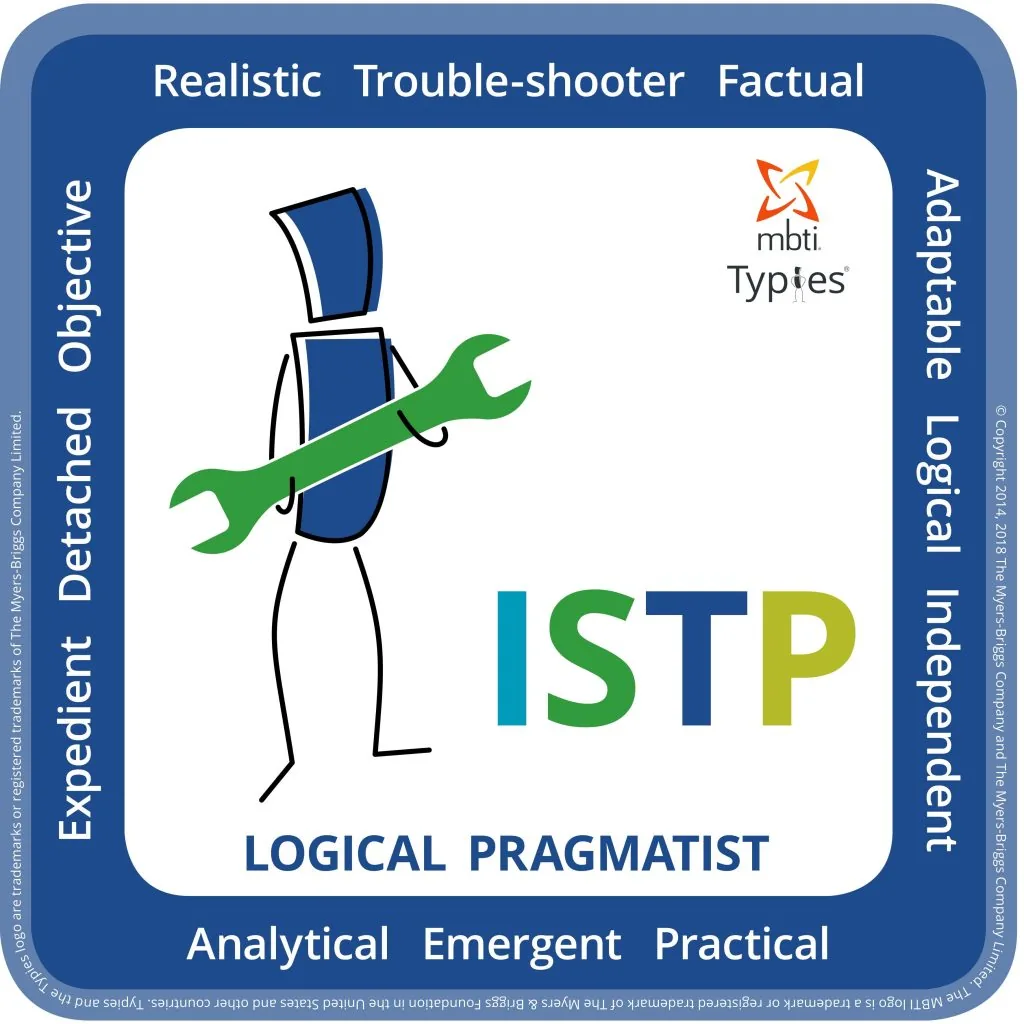
Strengths of ISTP Personalities
ISTPs are self-confident and easygoing, thriving under challenging situations. Action-oriented, they quickly analyse a situation and implement whatever change is needed. Traditional methods don't hold much appeal — they'd rather try something new every time, never resisting a risk and always learning from experience. All in all, their practical, logical, and realistic nature makes their work stand out.
Weaknesses of ISTP Personalities
ISTPs can work on a few blind spots to round out their personality. They feel plenty of emotion inside but usually struggle to express it, which can make them hard for others to read. They sense others' feelings but avoid emotional conversation, which can come across as insensitive at times. Regular patterns, schedules, and pre-planned routines bore them quickly, and they don't always weigh others' needs before taking a risk to try something new. Self-learners and fiercely independent, they don't like compromising their autonomy in life.
Careers for ISTP
Virtuosos need personal space and prefer working alone, enjoying relationships with like-minded people. When analysing a situation, they lean on facts and figures to support their ideas, sensing what's needed and devising a plan accordingly. They love experimenting with new things and need the freedom to try their hand at them, enjoying practical, analytical, real-world problems. Jobs like actor, engineer, lawyer, scientist, mathematician, and photographer suit ISTP particularly well.
ISTP Cognitive Functions
A person's cognitive functions are the backbone of their personality. Of the four functions everyone has, the primary one is the most dominant, while the inferior function rarely shows itself. Here are the cognitive functions behind ISTP, described briefly:
Introverted Thinking: ISTPs decide on things through careful observation, weighing each possible option precisely and keeping their thoughts to themselves. They set aside the emotional side of a situation and lean on objective information instead.
Extraverted Sensing: ISTPs live in the present and avoid long-term commitments, staying alert to how the world operates and sensing the slightest shift in their environment. Still, they only act on information they believe can be applied practically.
Introverted Intuition: ISTP's tertiary function helps them connect dots and devise patterns. It's not a trait ISTPs usually lean on, but every so often they'll make a decision based on gut feeling.
Extraverted Feeling: This inferior function surfaces in ISTPs during stressful moments. Under unusual pressure, they can lose control of their emotions, and unknowingly say things that offend others.
Other profiles of the 16 personality types
- ENFJ | Presentation of the Protagonist | MBTI Profile
- ENTJ | presentation of the Commander | MBTI profile
- ENTP | presentation of the Debater | MBTI profile
- ESFJ | presentation of the Consul | MBTI profile
- ESFP | Presentation of the Entertainer | MBTI profile
- ESTJ | presentation of the Executive | MBTI profile
- ESTP | Presentation of the Entrepreneur | MBTI profile
- INFJ | Presentation of the advocate | MBTI profile
- INFP | presentation of the Mediator | MBTI profile
- INTJ | presentation of the Architect | MBTI profile
- INTP | presentation of the Logician | MBTI profile
- ISFJ | presentation of the Defender | MBTI profile
- ISFP | presentation of the Adventurer | MBTI profile
- ISTJ | Presentation of the Logistician | MBTI profile
- ENFP | presentation of the Campaigner | MBTI profile
This article was written by Marc Prager.