




What does ISTJ Stand For?
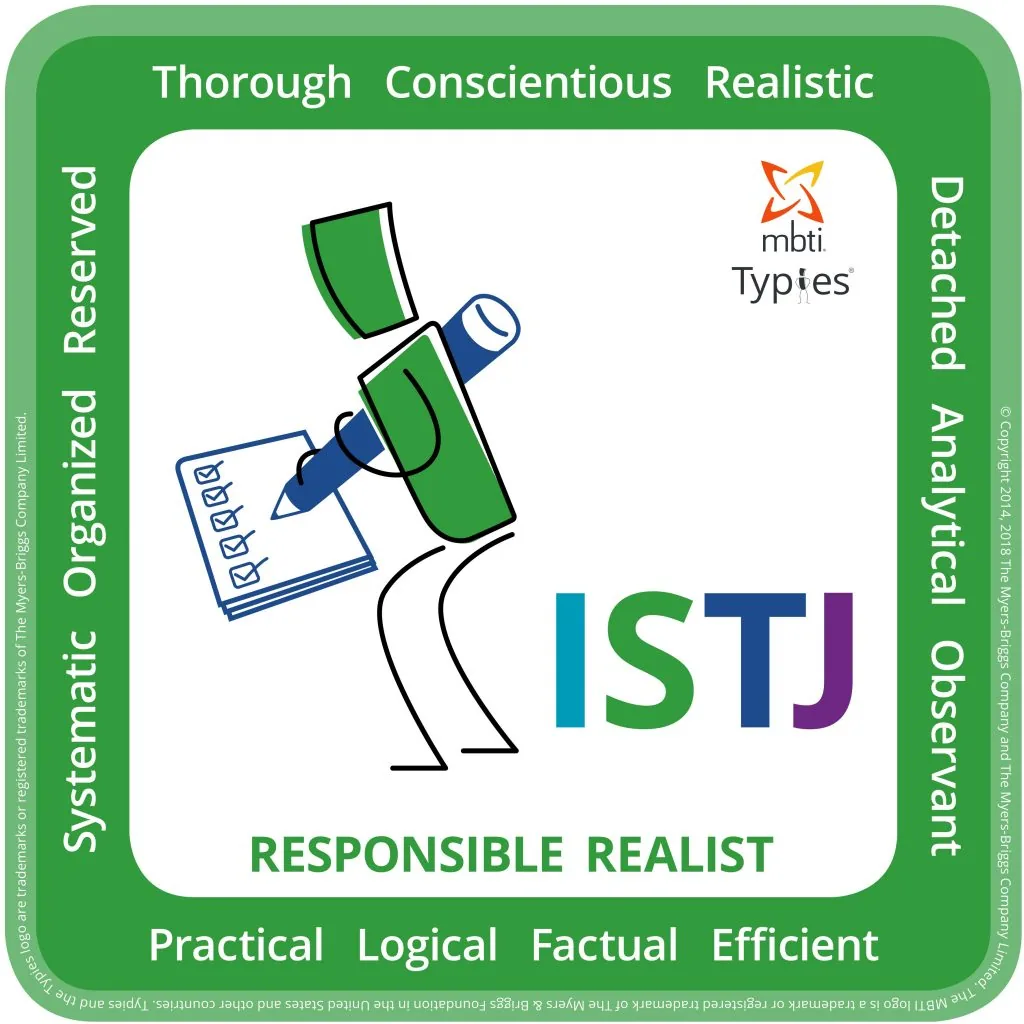
ISTJ stands for Introverted, Sensing, Thinking, and Judging. ISTJs prefer solitude to social gatherings, are self-reliant, and value time alone. Their decisions rest on logical reasoning rather than abstract ideas, favouring concrete facts and figures. They thrive in structured environments, plan well ahead, and generally dislike last-minute changes — which is why they're often called the "Responsible Realist".
Which MBTI is Compatible with ISTJ?
ISTJs are introverted, with clear, well-defined rules for life, and function best alongside personalities who understand their values. Their reserved nature is nicely balanced by outgoing, socially active types — making ESFPs and ESTPs strong matches. These partnerships help ISTJs loosen up, embrace spontaneity, and stay grounded, while ISTJs help their partners stay focused and structured at work.
Is ISTJ the Rarest Personality Type?
The ISTJ is actually the most common MBTI personality type, making up about 15.9% of the world's population — 18.9% of men and 13.3% of women. Being common has its perks: with so many ISTJs around, people already recognise their strengths and weaknesses, making it easy for them to fit into almost any environment.
Why are ISTJs So Popular?
ISTJs always look for the practical way to handle things. They think before acting and aren't fond of spontaneity. Values and tradition matter to them, and they carry these into whatever role they take on. Independent workers who stay reserved around others, their practical approach, work ethic, and decisiveness are highly valued by employers. In life, it's their reliability, loyalty, and organised way of living that people admire most.
Key Traits of ISTJ Personality
ISTJs stay organised, whether in their personal life or at work. They favour objective data and information when making decisions, using logical reasoning to reach conclusions. Self-oriented by nature, they need personal space to recharge. Here are the traits that set them apart:
- Responsible
- Focused
- Logical
- Decisive
Strengths of ISTJ Personalities
Knowing your personality strengths can work wonders for your career and your life. ISTJs are among the best planners: they don't rush and always devise a strategy beforehand. They're role models for living a structured life true to their traditions and values. Their practical, analytical thinking guides them toward sound choices, and their loyalty and reliability make them people you can count on.
Weaknesses of ISTJ Personalities
No personality type is flawless, and ISTJs have their blind spots too. They can become stubborn and short-tempered when others fail to follow their rules or order. They can also come across as insensitive to others' feelings and overly judgmental at times.
Careers for ISTJ
ISTJs favour a responsible, organised, and practical approach to work, following step-by-step instructions to avoid costly mistakes. They rely on facts and evidence, work hard, and prefer to handle things independently. Careers that suit them well include programming, law, medicine, and investigative work — fields that reward exactly the traits ISTJs bring to the table.
ISTJ Cognitive Functions
Here are the cognitive functions reflected in the ISTJ personality type:
Introverted Sensing: Their dominant function, letting ISTJs stay firmly grounded in the present. They keep a sharp eye on their surroundings and pick up on what's happening around them.
Extraverted Thinking: ISTJs aren't drawn to abstract ideas and prefer logical, concrete information. They pay close attention to detail and take great care in their work.
Introverted Feeling: Based on internal feelings, ISTJs sometimes make assumptions. This trait isn't dominant, but every so often they'll go with their gut.
Extraverted Intuition: ISTJs' rarest trait is an occasional urge to experiment with new ideas. It's not their usual mode, but this side of their personality does surface now and then.
MBTI articles available on this site:
- ENFJ | Presentation of the Protagonist | MBTI Profile
- ENTJ | presentation of the Commander | MBTI profile
- ENTP | presentation of the Debater | MBTI profile
- ESFJ | presentation of the Consul | MBTI profile
- ESFP | Presentation of the Entertainer | MBTI profile
- ESTJ | presentation of the Executive | MBTI profile
- ESTP | Presentation of the Entrepreneur | MBTI profile
- INFJ | Presentation of the advocate | MBTI profile
- INFP | presentation of the Mediator | MBTI profile
- INTJ | presentation of the Architect | MBTI profile
- INTP | presentation of the Logician | MBTI profile
- ISFJ | presentation of the Defender | MBTI profile
- ISFP | presentation of the Adventurer | MBTI profile
- ISTP | presentation of the Virtuoso | MBTI profile
- ENFP | presentation of the Campaigner | MBTI profile
This article was written by Marc Prager.