




What does INFP Stand For?
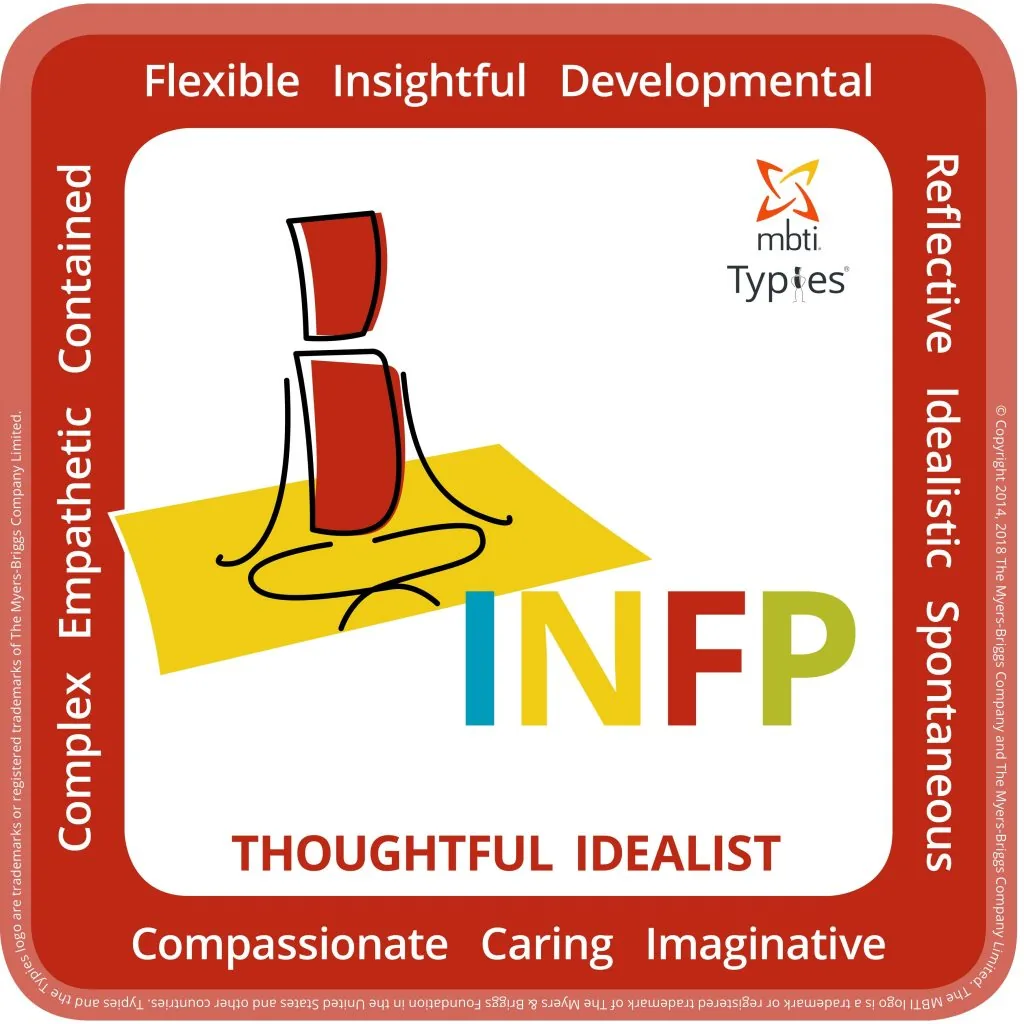
INFP is an acronym for Introverted, Intuition, Feeling, and Perceiving. People with this personality are caring, sensitive, loyal, and spontaneous. They enjoy close relationships and are always ready to lend a hand. They hold their inner values and feelings in high regard, and while they enjoy helping people at work, they function better alone. Their introversion, creativity, and idealism have earned them the nickname "Mediators".
Which MBTI is Compatible with INFP?
INFPs are introverted and prefer time alone. That said, the personality types most compatible with them share strong intuition and feeling functions. ENFJ, ENFP, and INFJ all get along well with INFPs, sharing a similar outlook on life and strong communication skills that complement each other nicely. INFPs connect instantly with people who are creative and visionary.
Is INFP the Rarest Personality Type?
Among the roughly 8 billion people in the world, INFPs make up about 4% of the population, one of the rarer types. INFP women slightly outnumber INFP men, though both share the same core characteristics. Their remarkable open-mindedness, deep compassion, and genuinely non-judgemental approach set INFPs apart and make them valued members of any team or community.
You champion authenticity and seek harmonious solutions — but is that description truly you? The MBTI is a powerful tool for understanding your core values, decision-making style, and how you engage with the world. Find out your true self: discover your MBTI type today.
Why are INFPs So Popular?
INFPs tend to spot patterns and possibilities within a situation as they work toward their goals. Focused on future outcomes, they can overlook the smaller details, yet they're self-determined enough to hit their targets while motivating others along the way. People find INFPs helpful and encouraging — they help others grow and prosper, acting almost as servants of humanity who love creating harmony. They're also highly creative, with a strong pull toward arts, music, poetry, and literature.
Key Traits of INFP Personality
Intuition is the guiding force that gets INFPs through life. They grasp information quickly and love focusing on the bigger picture, recharging in solitude and living by their inner world. The following traits set INFPs apart from other personality types:
- Empathy
- Creativity
- Moral Integrity
- Introverted Nature
Strengths of INFP Personalities
Taking a personality test like the MBTI sharpens your understanding of yourself. You can put those strengths to work in better career choices, stronger relationships, sharper performance, and more effective communication. INFPs have a strong vision for future outcomes and always think big. They make sure to address everyone's needs around them and help others reach their full potential at work. They value relationships highly but still crave some time in solitude, and in pursuing their dreams they work to make decisions everyone can accept, staying sensitive to others' feelings.
Weaknesses of INFP Personalities
There are a few things INFPs are wise to work on. They tend to overlook details, which occasionally puts them in a tight spot, and being so overwhelmed by emotion, they often take things too personally. Their imagination can carry them far, tipping into pure idealism about situations, and their reluctance to open up about their thoughts and feelings can make their point of view hard for others to grasp.
Careers for INFP
INFPs love their comfort zone and enjoy working alone, though they work well with others and never resist offering help. Highly creative and imaginative, these traits add real value to their work. They hold firmly to their core values and ethics and are ready to defend them, and they're skilled at self-expression and written communication. Career paths that put these strengths to use suit INFPs best — options like graphic design, art, psychology, writing, therapy, and social work.
INFP Cognitive Functions
Like other personality types, INFP shows four distinct cognitive functions, with the dominant and auxiliary functions usually shaping the person most. Here are INFP's cognitive functions:
Introverted Feeling: INFPs are introverts who keep their feelings inside. They're not always comfortable expressing emotion out loud but communicate well in writing, staying sensitive to others' needs — the epitome of compassion and empathy.
Extraverted Intuition: One of their most valuable leadership qualities: seeing the big picture and acting on it. Always on the lookout for possibilities and options, they're deeply open-minded, and their strong intuition helps them connect the dots and make better decisions in life and at work.
Introverted Sensing: They keep a good eye on the world around them, holding onto vivid memories of life's pleasures and loving to revisit them in quiet moments.
Extraverted Thinking: At times INFPs think logically rather than emotionally, assuming the world runs on logic and that everything connects.
Other articles on 16 types of MBTI
- ENFJ | Presentation of the Protagonist | MBTI Profile
- ENTJ | presentation of the Commander | MBTI profile
- ENTP | presentation of the Debater | MBTI profile
- ESFJ | presentation of the Consul | MBTI profile
- ESFP | Presentation of the Entertainer | MBTI profile
- ESTJ | presentation of the Executive | MBTI profile
- ESTP | Presentation of the Entrepreneur | MBTI profile
- INFJ | Presentation of the advocate | MBTI profile
- INTJ | presentation of the Architect | MBTI profile
- INTP | presentation of the Logician | MBTI profile
- ISFJ | presentation of the Defender | MBTI profile
- ISFP | presentation of the Adventurer | MBTI profile
- ISTP | presentation of the Virtuoso | MBTI profile
- ISTJ | Presentation of the Logistician | MBTI profile
- ENFP | presentation of the Campaigner | MBTI profile
This article was written by Marc Prager.