




What Does ESTJ Stand For?
ESTJ stands for Extraverted, Sensing, Thinking, and Judging. ESTJs tend to follow rules and regulations closely, and come across as decisive, organised, and goal-driven. Though energised by the external world, they still lean on logic when making decisions, and enjoy spending time with people while embracing a bit of adventure. At work and beyond, they hold firm beliefs and expect others to follow suit — hence the nickname ‘The Commander’.
What MBTI Is Compatible With ESTJ?
An ESTJ finds INTP or ISTP the most compatible MBTI types for lasting relationships. Both carry an introverted nature that ESTJs balance neatly with their own extroverted side, and leading them in the right direction is what they enjoy doing. Their vision and management skills also make them effective in almost any leadership role.
Is ESTJ the Rarest Personality Type?
ESTJ is one of the most valued personalities in any organisation, thanks to its leadership capabilities and result-driven approach. At work or in their personal life, ESTJs excel at setting goals, getting things done on time, and staying organised. That said, ESTJ is the fifth most common type of personality in the world, and the second most common among men. Roughly 9% of the general population is ESTJ — about 6% of women and 11% of men.
Why Are ESTJs So Popular?
ESTJ is often described as practical and realistic. They tend to hold leadership positions, taking pride in bringing people together and preserving social structure. Quick to take charge of a situation and find immediate solutions, they're decisive, disciplined about following through, and highly structured in how they work. Their main concern is keeping social order intact, and being naturally outgoing, they love engaging with the people around them — often described as dependable, friendly, and genuinely influential personalities.
Strengths of ESTJ Personalities
A personality's strengths help people excel in both career and life, and a test like MBTI is a great way to uncover your potential and put it to work. The best thing about ESTJs is how honest and dedicated they are. They carry real leadership qualities and know how to take charge in times of adversity, while also keeping social order intact and everything under control. Digging deep into the present circumstances, ESTJs like to plan ahead of time. They hold their values, principles, and traditions in high regard, which helps them function smoothly in every part of life. Aware of their surroundings, they know how to navigate unfortunate events, and they build genuinely good, reliable relationships with the people around them.
Key Traits of ESTJ Personality
As supervisors, ESTJs excel at taking charge and getting things right the first time. Logical and rational in their thinking, they work through things systematically and reorganise anything that doesn't match the guidelines. ESTJs carry the following traits:
Structured
Rational
Result-oriented
Dependable
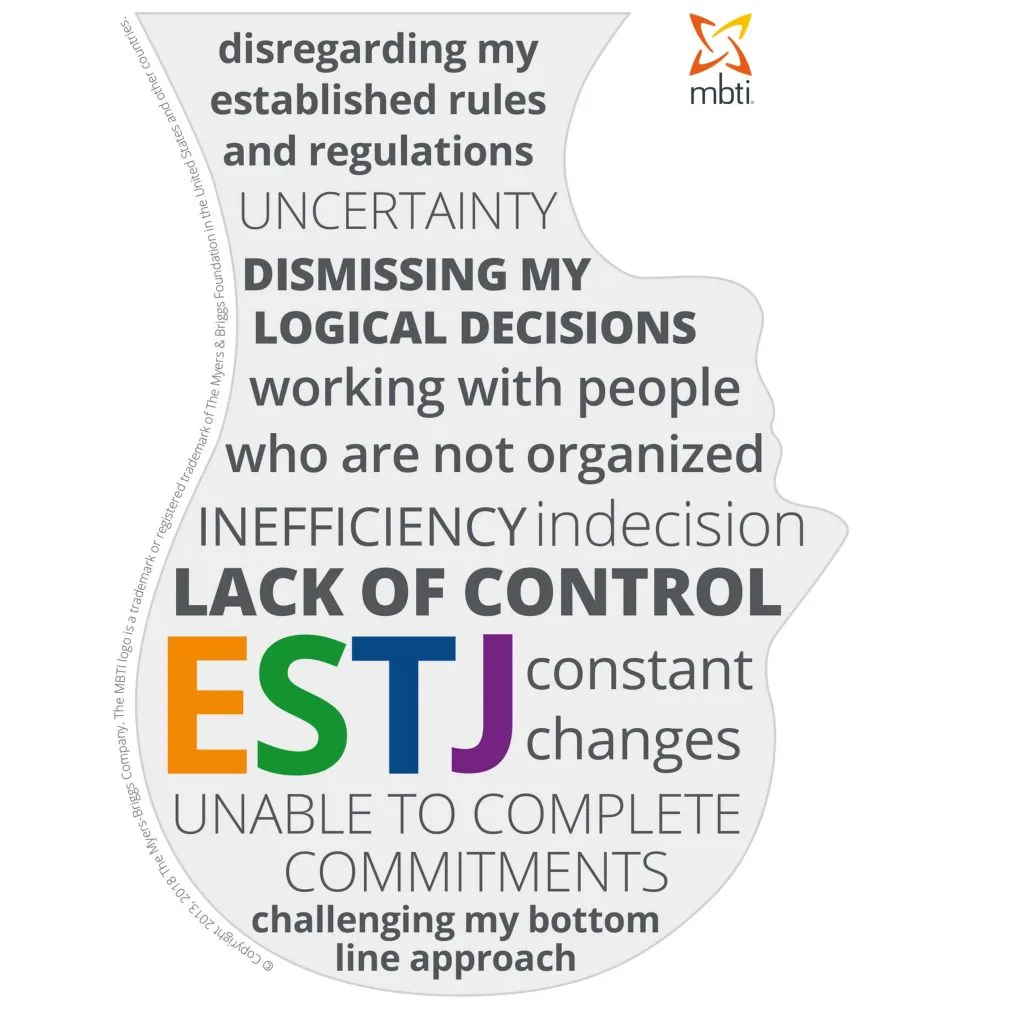
Weaknesses of ESTJ Personalities
ESTJs need to work on the weaker sides of their personality to become more effective in their career, communication, relationships, and decision-making. They want control over everything and can come across as bossy or arrogant at times, expecting others to meet the same high bar they set for organisation and quality. They want concrete facts and figures to plan their work and don't adapt easily to last-minute changes. In their drive to maintain order and follow directions, they can become stubborn and reluctant to hear other people's opinions.
Careers for ESTJ
ESTJ is a dedicated, organised, and strong-minded personality. They excel at setting goals and put maximum effort into hitting them on time, though they leave little room for creative ideas, preferring to work from facts and organise their methodology in advance. Their straightforward nature isn't always welcomed by peers, since they're never shy about giving honest feedback. Career paths that involve leadership and management roles are best suited for ESTJs. Management, the military, law, administration, and teaching are just a few of the careers that suit this personality type.
ESTJ Cognitive Functions
Cognitive functions are what drive each of us to thrive in the world, and the way they combine shapes every individual's unique personality. Let's look at the cognitive functions behind the ESTJ personality type:
Extraverted Thinking: ESTJs prefer to work with information in hand rather than abstract ideas. Highly practical in their approach, they lean on logic to reach conclusions, and their decisiveness pushes them to act quickly and get things done. While this makes them strong leaders, it can also mean jumping to judgment before seeing the full picture.
Introverted Sensing: the auxiliary function supporting the dominant extraverted thinking. ESTJs hold a clear picture of their past experiences and measure them against present events. Craving stability and reliability, they often resist change at work or in life.
Extraverted Intuition: the tertiary function in ESTJs. Less prominent than the rest of their personality, it still gives them a sharp, innovative intuition — a knack for capturing information, making connections, and spotting patterns and possibilities within it.
Introverted Feeling: the rarest function in ESTJs. They typically don't base decisions on feeling, though in certain circumstances, emotion can override logic and has to be taken into account.
- ENFJ | Presentation of the Protagonist | MBTI Profile
- ENTJ | presentation of the Commander | MBTI profile
- ENTP | presentation of the Debater | MBTI profile
- ESFJ | presentation of the Consul | MBTI profile
- ESFP | Presentation of the Entertainer | MBTI profile
- ESTP | Presentation of the Entrepreneur | MBTI profile
- INFJ | Presentation of the advocate | MBTI profile
- INFP | presentation of the Mediator | MBTI profile
- INTJ | presentation of the Architect | MBTI profile
- INTP | presentation of the Logician | MBTI profile
- ISFJ | presentation of the Defender | MBTI profile
- ISFP | presentation of the Adventurer | MBTI profile
- ISTP | presentation of the Virtuoso | MBTI profile
- ISTJ | Presentation of the Logistician | MBTI profile
- ENFP | presentation of the Campaigner | MBTI profile
This article was written by Marc Prager.